Welcome to the Mathematical World!
Pierre de Fermat
Father of Modern Number Theory
Pierre de Fermat (1607–1665) was a French mathematician, lawyer, and government official who is remembered as one of the greatest minds in the history of mathematics.
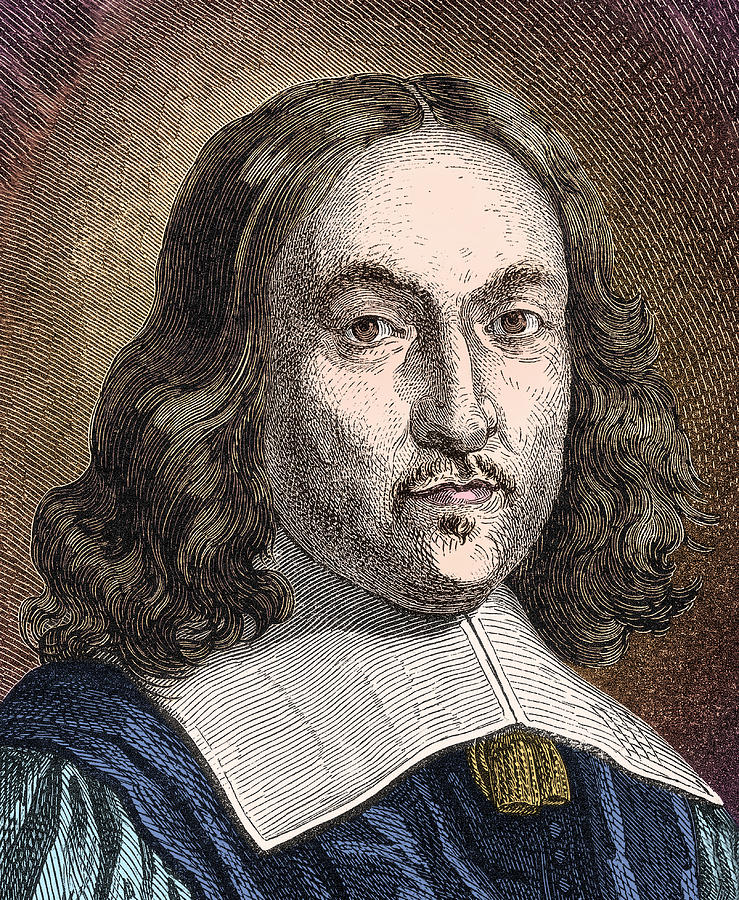
Born: August 17, 1607, in Beaumont-de-Lomagne, France.
Education: Studied law at the University of Orléans and became a lawyer.
Though trained in law, mathematics was his passion, and he pursued it in his free time.
Fermat worked as a counselor at the Parliament of Toulouse, which was a high-ranking legal position. Despite his demanding career, he devoted evenings and spare hours to mathematics. He was never a professional mathematician in the modern sense.
Contributions to Mathematics
Fermat is often called the father of modern number theory. His work laid foundations for several branches of math:
1. Analytic Geometry (with Descartes)
Independently of René Descartes, Fermat developed analytic geometry, linking algebra and geometry.
He introduced methods to determine tangents to curves, an early step toward calculus.
2. Probability Theory
In correspondence with Blaise Pascal, Fermat helped establish the foundations of probability theory,
which
is
important in modern statistics and finance.
3. Calculus (before Newton & Leibniz)
Fermat discovered methods to find maxima, minima, and tangents to curves.
His methods anticipated differential calculus.
4. Number Theory
Fermat studied prime numbers and properties of integers.
He formulated Fermat's Little Theorem:
\[ a^p \equiv a \pmod{p}, \quad \text{for any integer } a \text{ and prime } p \]
This theorem became fundamental in cryptography, with applications such as RSA encryption.
5. Fermat's Last Theorem
His most famous claim was written in the margin of a book:
"It is impossible to separate a cube into two cubes, or a fourth power into two fourth powers, or in general, any power higher than the second into two like powers. I have discovered a truly marvelous proof, which this margin is too narrow to contain."
\[ x^n + y^n \neq z^n \quad \text{for integers } x,y,z > 0 \text{ and } n > 2 \]
This became known as Fermat's Last Theorem, one of the most famous problems in mathematics.
Fermat was a correspondence mathematician: he shared ideas through letters with other scholars (Pascal, Mersenne, Descartes, etc.). He often left bold claims without proofs, challenging others to solve them. This made him both admired and controversial in his time.
Died: January 12, 1665, in Castres, France. His son published many of his mathematical notes posthumously. Fermat's work anticipated major developments in mathematics centuries later.
Pierre de Fermat is remembered as:
- A pioneer of number theory.
- A co-founder of probability.
- An early discoverer of ideas leading to calculus and optics.
- The originator of the most famous math problem in history: Fermat's Last Theorem.

All rights reserved by the Mathematical Unity
Contact: +8801400044645
Email: mathematicalhorse1453@gmail.com
Our Discord Server: Mathematical Unity [Ulus Riyadiyat]